Joël Holmès
ActingAbout Joël Holmès
Joël Holmès (1 August 1928 – 2 September 2009) was a Romanian-born French singer-songwriter. Joël Holmès was born under the name Joël Covrigaru in 1928 in Tighina, where his parents moved from Akkermansky Uyezd (father from the city of Izmail, mother from the village of Talmaza) of the Russian Empire (which owned the zone until 1918). In 1934, Holmès moved to France with his parents. During World War II, his parents Michel Covrigaru (1892–1942) and Hana Ehrlich (1898–1942), as foreign nationals of Jewish origin, were interned in the Drancy concentration camp, from where on 28 September 1942 they were deported to Auschwitz and killed on arrival on 3 October the same year. Joel himself was sheltered by a familiar family until the end of the occupation. After the war, he changed several professions (including working as an electrician and a photographer), then entered the theater department of Le Petit Conservatoire de la chanson Mireille Artyush. Since 1954 he has performed in various Parisian cabarets (Milord l'Arsouille, Cabaret L'Écluse) with Pia Colombo, Maurice Fanon, Georges Moustaki and Jean Ferrat. After winning the broadcast Numéros 1 de demain of radio Europe 1 in 1958, the name of Joël Holmès gained fame and he recorded his first album. In total, since 1959, 9 albums by J. Holmes have been released with the performance of his own songs (some of which were created with co-authors). Received the Grand Prix of the Académie Charles-Cros in 1960 (the song was co-written with Georges Mustaki). In 1965 he took part in the Sopot International Song Festival (song "L'amour", lyrics by J. Holmès, music by B. Kesler). Holmès' most famous songs include "La mer m'a donné" (written with Georges Moustaki), "Jean-Marie de Pantin" (written with Maurice Fanon), "La vie s'en va", "Il y a du chambard dans les marguerites", "Au quai du point du jour". The last album was released in 1966, after which he unexpectedly finished his career. Holmès' songs were subsequently recorded by various performers. The song "La vie s'en va" was translated into Russian by Boris Poloskin and became very popular in the USSR under the name "I Love" («Я люблю») performed by Sergei and Tatiana Nikitin. He was married to film producer and screenwriter Véra Belmont. His son Stefan was a cameraman. Source: Article "Joël Holmès" from Wikipedia in English, licensed under CC-BY-SA 3.0.
Career Statistics & Market Influence
Analyzing the cinematic journey of Joël Holmès reveals a career defined by diverse artistic exploration. With a total of 1 major appearances, the actor has established a significant footprint in global cinema.
Genre Dominance: Drama
The majority of Joël Holmès's filmography leans towards the Drama genre. Audience data suggests that viewers respond most favorably to this persona, though their versatility has allowed for successful crossovers into other categories.
The "Box Office" Signature
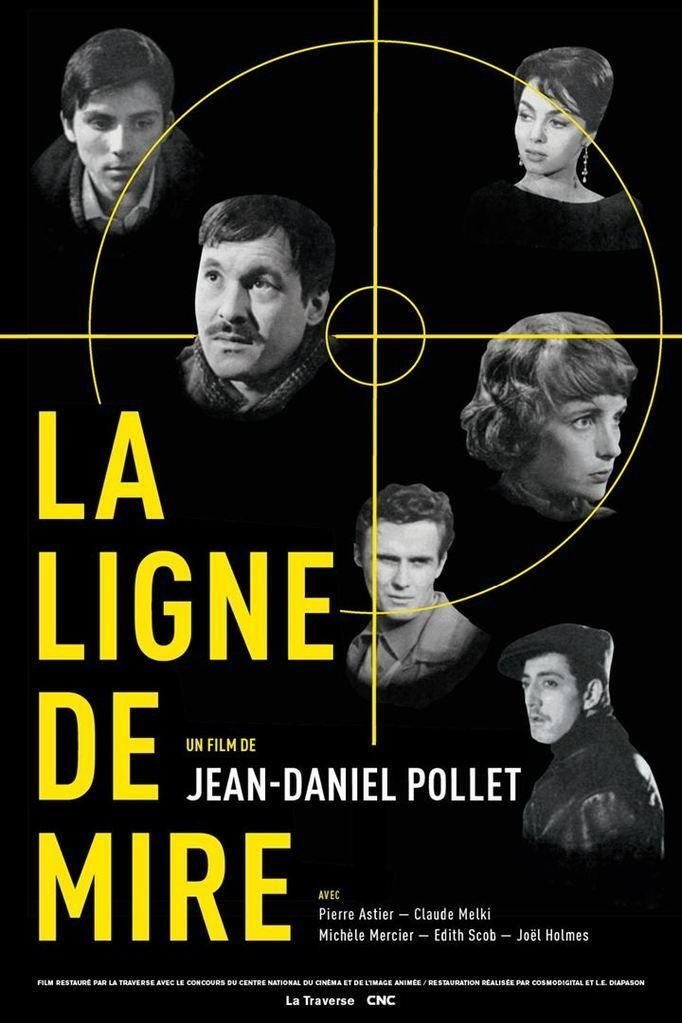
With a 0% Success Ratio (movies rated above 6.5), Joël Holmès remains a reliable draw for studios. Their peak performance was recorded in Line of Sight, which continues to be the benchmark for their career rating-wise.
Best Joël Holmès Movies Ranked
Must-watch hits from Joël Holmès's career based on audience ratings.
Complete Filmography & Success Status
Tracking the career evolution and box office verdicts of Joël Holmès.
| Year | Movie | Character | Success | More |
|---|---|---|---|---|
| 1960 | Line of Sight | Marc | Flop | Similar → |
Joël Holmès - Frequently Asked Questions
What is the best movie of Joël Holmès?
According to audience ratings, the best movie starring Joël Holmès is "Line of Sight" with a rating of 5.2/10.
How many movies has Joël Holmès acted in?
Joël Holmès has been featured in at least 1 major films throughout their career.