
Monique Watteau
ActingAbout Monique Watteau
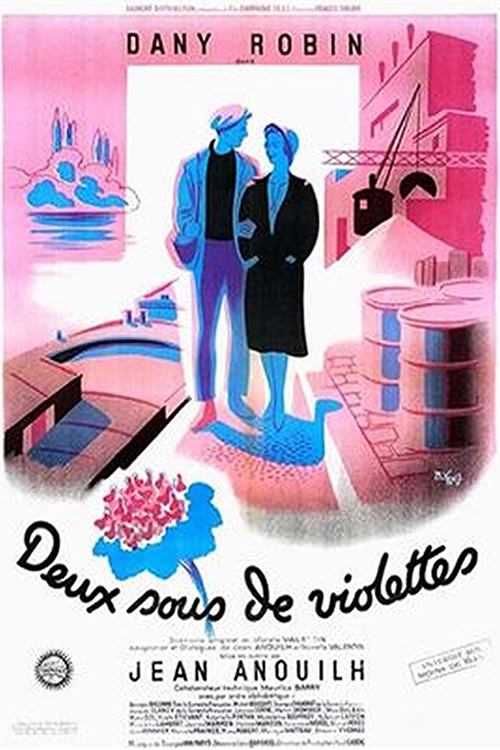
Alika Lindbergh (born Monique Dubois, 23 December 1929), commonly known by her former name Monique Watteau, is a Belgian fantasy fiction writer and artist. Watteau was born Monique Dubois in Liège on 23 December 1929. Her father was Hubert Dubois, a playwright and poet with ties to Surrealism. Watteau studied painting and drawing at the Académie royale des beaux-arts de Liège, and then went on to the Royal Conservatory of Liège to study theatre. At twenty, she left Belgium for Paris, where she met the Belgian scientist Bernard Heuvelmans, famous for his work in cryptozoology. In 1951, she appeared under the name Monique Watteau in Jean Anouilh's film Two Pennies' Worth of Violets. She also worked as a photography model. Watteau's first novel, La colère végétale, was published in 1954. Critics praised it as a striking literary debut; Albert-Marie Schmidt wrote that Watteau had created "a new kind of fantasy" (un nouveau fantastique). Watteau was reportedly considered for the Prix Goncourt and the Prix Femina, but she was removed from the running of the latter prize in 1954 when the jury discovered that she had posed for nude photographs. Her following novels, La nuit aux yeux de bête (1956), L'ange à fourrure (1958), and Je suis le ténébreux (1962), cemented her reputation as one of the foremost Francophone fantasy writers of the twentieth century. Her work is marked by its sensuality of expression and its ecological, Taoist, and Surrealist themes. The writer Anne Richter described Watteau's novels as prime examples of feminism in twentieth-century fantasy. Her first three novels were written under the name Monique Watteau; her fourth gave her name as Monique-Alika Watteau. After its publication, she abandoned the name Monique altogether, going by Alika Watteau and later Alika Lindbergh. After publishing four novels, she turned to painting as a career. Her output as a painter includes a notable corpus of cryptozoological art, including her work as the primary illustrator of Bernard Heuvelmans's books. When the cartoonist Hergé, researching Tintin in Tibet, asked Heuvelmans for details on the yeti, Watteau supplied a "graphic reconstitution" of the creature for Hergé's reference. In the 1970s, Watteau published two new books, Nous sommes deux dans l'Arche et Quand les singes hurleurs se tairont. She published an autobiographical work, Le testament d'une fée, in 2002. Watteau also worked as an animal rights activist. In the early 1990s, she was the president of the Cercle national pour la défense de la vie, de la nature, et de l'animal (CNDVNA), a conservation advocacy group within the French National Front. Heuvelmans was Watteau's first husband; they divorced in 1961, but remained friends and collaborators. According to her autobiography, Watteau was romantically involved with actor Yul Brynner from 1961 to 1967. It was after this affair that she changed her first name to Alika, which she and Brynner had used as her nom d'amour. ... Source: Article "Monique Watteau" from Wikipedia in English, licensed under CC-BY-SA 3.0.
Career Statistics & Market Influence
Analyzing the cinematic journey of Monique Watteau reveals a career defined by diverse artistic exploration. With a total of 2 major appearances, the actor has established a significant footprint in global cinema.
Genre Dominance: Drama
The majority of Monique Watteau's filmography leans towards the Drama genre. Audience data suggests that viewers respond most favorably to this persona, though their versatility has allowed for successful crossovers into other categories.
The "Box Office" Signature
With a 0% Success Ratio (movies rated above 6.5), Monique Watteau remains a reliable draw for studios. Their peak performance was recorded in Two Pennies Worth of Violets, which continues to be the benchmark for their career rating-wise.
Best Monique Watteau Movies Ranked
Must-watch hits from Monique Watteau's career based on audience ratings.
Complete Filmography & Success Status
Tracking the career evolution and box office verdicts of Monique Watteau.
| Year | Movie | Character | Success | More |
|---|---|---|---|---|
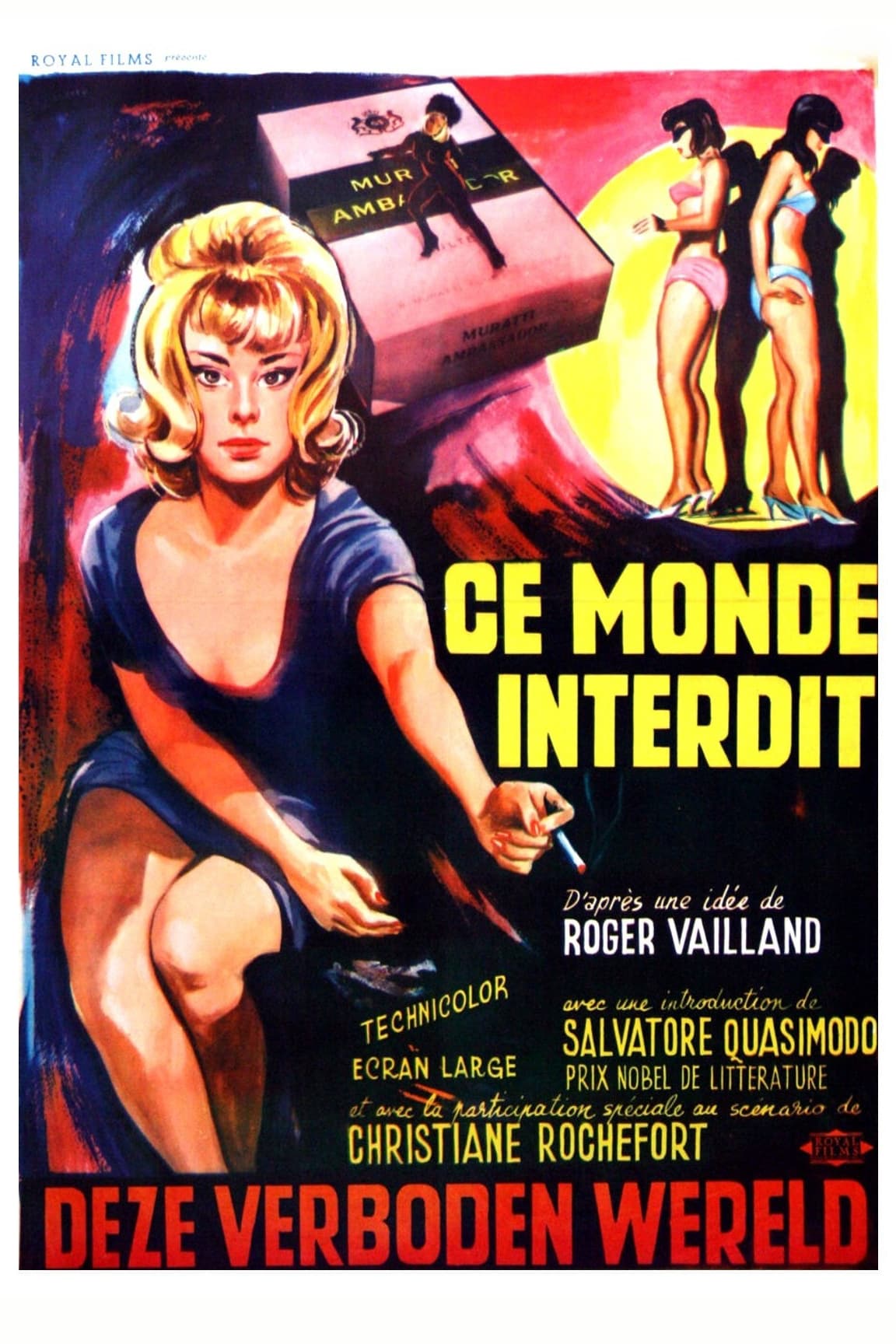
| 1963 | Questo mondo proibito | - | Flop | Similar → |
| 1951 | Two Pennies Worth of Violets | Simone | Flop | Similar → |
Monique Watteau - Frequently Asked Questions
What is the best movie of Monique Watteau?
According to audience ratings, the best movie starring Monique Watteau is "Two Pennies Worth of Violets" with a rating of 3.0/10.
How many movies has Monique Watteau acted in?
Monique Watteau has been featured in at least 2 major films throughout their career.